
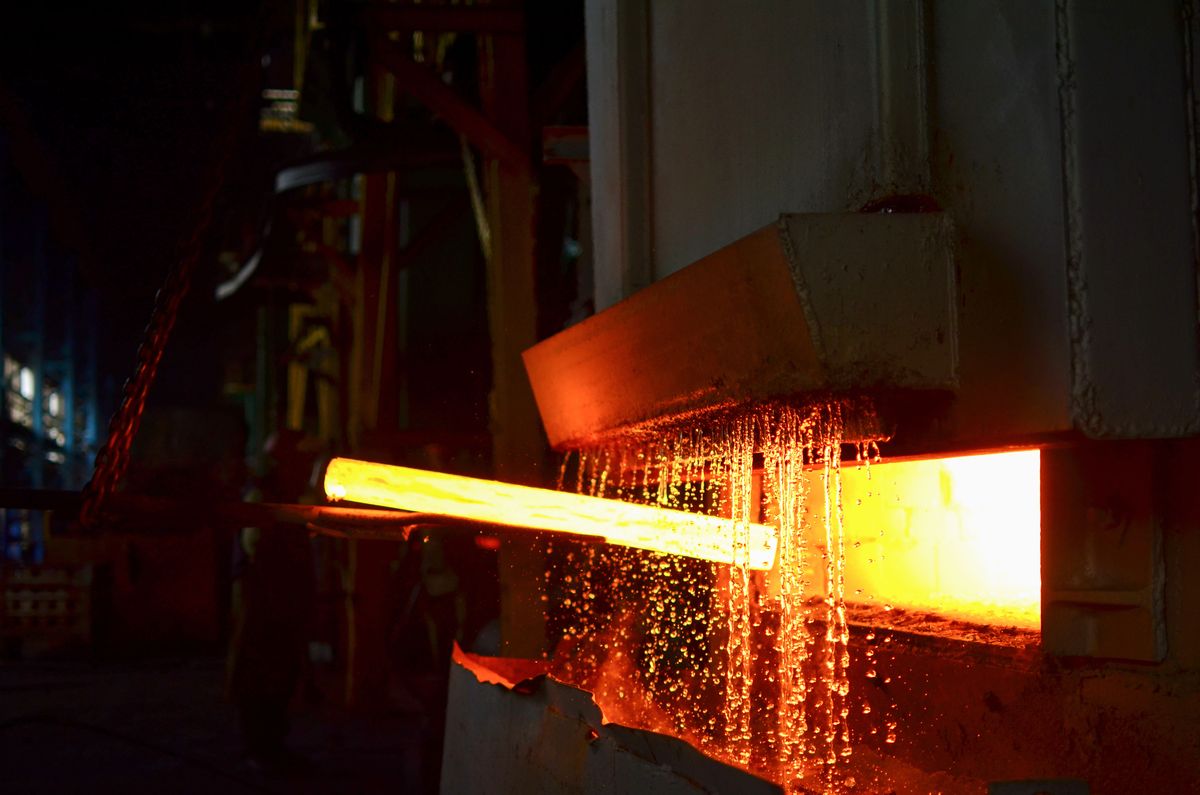
Before a metal ever gets into our hands for finishing, there are many stages of the production process. And in the metal industry, material properties don’t stop at alloy selection. How a metal is processed after forming plays a critical role in its strength, flexibility, and final performance as a finished product. One of the most common and important heat-treatment processes is metal annealing. But what is annealing metal, and why is it so widely used across manufacturing, architecture, and industrial applications?
While annealing is done at the mill level before the Polished Metals team begins work, and is not a service we offer, annealing still impacts the properties of any finished metal product. Because of that, we’re sharing more on how annealing works, its benefits and drawbacks, and which metals and industries rely on annealed materials.
What Is Metal Annealing?
Metal annealing is a heat-treatment process in which metal is heated to a specific temperature, held there for a period of time, and then slowly cooled. This controlled process alters the metal’s internal structure, making it softer, more ductile, and easier to work with.
Annealing is commonly performed after metal has been cold-worked, bent, rolled, or otherwise formed, as those processes can increase hardness and internal stress. Following this process, the metal can be more easily formed into metal products and finished to a variety of specifications—where our team comes in.
What Is the Purpose of Annealing Metal?
The primary purpose of annealing is to reduce hardness and relieve internal stresses created during manufacturing. By reorganizing the metal’s grain structure, annealing improves its workability.
Overall metal annealing is used for:
- Increasing ductility and flexibility
- Reducing brittleness
- Improving machinability and formability
- Relieving internal stress
- Preparing metal for further processing or finishing
For industries that rely on precision forming or high-quality finishes, annealing is often a critical step.
Annealing vs. Tempering: What’s the Difference?
Annealing and tempering are both heat treatments, but they serve very different purposes.
- Annealing softens metal and improves ductility by heating it to a high temperature and cooling it slowly.
- Tempering is typically applied after hardening and is used to reduce brittleness while retaining strength.
Because of these differences, annealing is more common earlier in the manufacturing process, while tempering is often used for finished or near-finished parts.
Benefits and Drawbacks of Metal Annealing
Benefits of Annealing
Metal annealing offers several important advantages:
- Improved formability for bending, shaping, and machining
- Reduced risk of cracking during fabrication
- Enhanced consistency for finishing and polishing
- Better performance in decorative and architectural applications
These benefits make annealing especially valuable for metals that will be highly finished or shaped into complex forms.
Potential Drawbacks
While annealing is beneficial, it does come with trade-offs:
- Reduced hardness and strength
- Additional processing time and cost
- Not ideal for applications requiring maximum structural strength
Because of this, annealed metals are typically selected when workability and finish quality are more important than raw strength.
Metals Commonly Annealed
Many of the metals annealed across the metal industry include the ones we finish here at Polished Metals.
Stainless Steel
Annealing stainless steel improves ductility and corrosion resistance after cold working. It’s commonly used before polishing for architectural and interior applications.
Naval Brass
Naval brass is often annealed to enhance formability while maintaining corrosion resistance, particularly for marine and architectural components.
Aluminum
Annealed aluminum is easier to shape and fabricate, making it ideal for architectural panels, trim, and decorative elements.
Commercial Bronze
Annealing commercial bronze helps relieve stress and improves machinability, especially for detailed components and decorative metalwork.
Brass
Brass alloys are frequently annealed to allow for intricate forming, extrusion, and finishing while preserving their distinctive appearance.
Copper
Annealed copper becomes highly ductile, making it suitable for bending, shaping, and applications requiring excellent conductivity.
Industries That Use Annealed Metals
Annealed metals are used across a wide range of industries where fabrication quality and finish consistency are critical.
Common industries include:
- Architecture and interior design
- Commercial construction
- Manufacturing and fabrication
- Marine and transportation
- Electrical and mechanical systems
- Decorative metalwork and art
In many of these applications, annealing helps ensure metals can be formed precisely and finished to high visual standards.
Polished Metals Works with Annealed Products
Annealing plays an important role in preparing metals for high-quality finishing—especially in applications where appearance, precision, and consistency matter. While we don’t offer annealing ourselves at Polished Metals, decades of experience working with annealed stainless steel, brass, bronze, aluminum, and copper allow us to deliver reliable metal finishing results across a wide range of projects.
With a large inventory, deep material expertise, and a fully equipped finishing facility, our team understands how heat treatment and finishing work together to achieve optimal results.
If you have questions about metal processing, finishing requirements, or material selection for your next project, reach out to Polished Metals to start the conversation.